

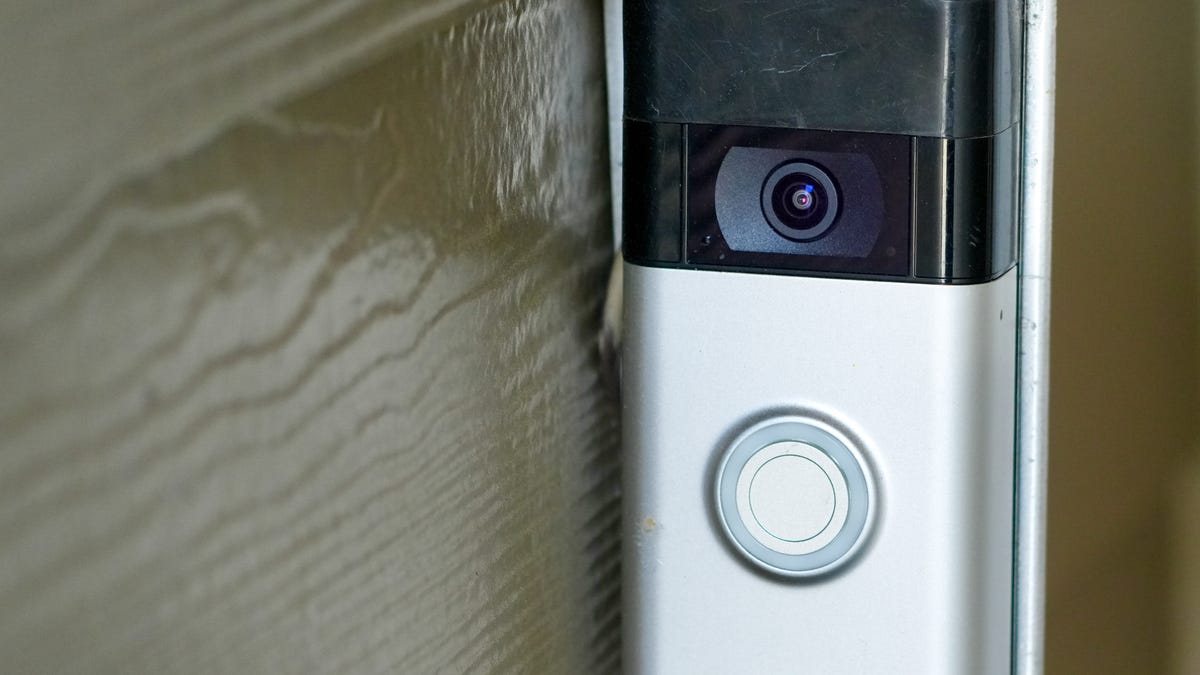
A Super Bowl ad for Ring security cameras boasting how the company can scan neighborhoods for missing dogs has prompted some customers to remove or even destroy their cameras.
Online, videos of people removing or destroying their Ring cameras have gone viral. One video posted by Seattle-based artist Maggie Butler shows her pulling off her porch-facing camera and flipping it the middle finger.
Butler explained that she originally bought the camera to protect against package thefts, but decided the pet-tracking system raised too many concerns about government access to data.
“They aren’t just tracking lost dogs, they’re tracking you and your neighbors,” Butler said in the video that has more than 3.2 million views.
Question is why they bought a Ring camera in the first place?
There is no way they can have been unaware that these gadgets can be accessed from outside.
But it was only when the evidence was put right in their face they finally connected the dots?
So my answer is quite simple: Because they are stupid, and bought a sleazy product from a known sleazy company, and when they found out it was in fact as sleazy as could be expected, they figured that maybe they didn’t want to to be voluntarily surveilled anyway.
Probably because of marketing.
(1) Clearly you’ve not talked to enough people outside the privacy-aware community. Absolutely they can have been unaware of that.
(2) They may well have known, but not known the scope, or not cared. If you’re having trouble with (for instance) porch pirates, you might not care about the privacy ramifications.
Yes. When you don’t live and breathe this stuff, a lot of times that’s what it takes.
My mom used to use the same password for every service. It was a ten-letter password that she came up with in 1999, and she essentially never deviated from it; until I typed it in for her on haveibeenpwned and showed how many times it had been leaked. People who don’t care about privacy won’t care until they’re shown how it actually affects them.
Profoundly uncharitable read on the situation. Are you “stupid” if you don’t know what you don’t know? We don’t have classes about this sort of thing in high school or anything. There are billions of dollars going toward telling people that sleazy products are actually great and companies actually care about their well-being, and only neckbeards like us on Lemmy spending $0 to tell them the opposite. If they’re not watching tech news because the regular news is too much, or because they have jobs and families and hobbies, or because they don’t know how to process or parse it, or just because they’re not interested and have never been convinced that they should be, they aren’t stupid, just propagandized.
First of all, “sleazy” is a perfect word for this, and thank you for using it.
But second, keep in mind that for a lot of people, most companies are still responsible members of society; “pillars of the community,” and generally worthy of trust. It’s not because they’re dumb, it’s because they’ve been propagandized into believing it.
People are waking up to the reality of big tech “convenience.” That’s a good thing. Don’t shoot at them for coming to their senses.
Thank you for bringing the detail and tone I was going to type. You covered so many good points. It’s nice to see someone outside the tech-heavy, privacy-hyperaware echo chamber.
Oh boy that is so true, I was laughing my ass off during the financial crisis about how people were shocked that banks are businesses trying to maximize profits like any other business.
They genuinely thought that banks were some sort of community institution that existed to help people with their finances, and not businesses that are selling products to make money.
Still even if people are so ignorant that they are unaware of privacy issues, they have chosen to be willfully ignorant, because this issue has been talked about non stop for decades. For nothing to sieve in at some point, you have to be a special kind of willfully ignorant.
Even people that are very low information on technology, know that the Internet is a source of potential surveillance, and having your info on the internet in any form is a potential for being surveilled. Everybody knows that all the big IT companies are trying to gather as much information as they can. And Amazon is right at the top among them.
So to claim they were ignorant of Amazon possibly collecting and sharing their data is a bit far fetched IMO.
Because every ad they see talks about how respectable and responsible they are. Like I said above, they’ve spent billions trying to cultivate this level of obliviousness in their customers.
In our sphere, sure. But most people don’t live in our sphere. Most people don’t mainline tech news and privacy updates. A lot of “normal people” (i.e. people you meet dropping your kids off at school, or in line at the supermarket, or on a bus) would have trouble telling you the name of the company that made the phone they stare at for seventeen hours a day. Some of the smartest, most world-aware people I know couldn’t tell you the difference between “encrypted” and “password-protected.” The stuff that breaks through into the mainstream are the huge breaches, but the problem is always spun to be the hackers, or one guy in the IT department who did something wrong, or whatever, not the fact that they’re even collecting all of this data in the first place.
And this isn’t willful ignorance, it’s just not something they think applies to them. Maybe they bought the “if you have nothing to hide you have nothing to fear” line, but more likely they just don’t actively think about it at all. Like how, if you live inland, you probably rarely worry about tsunamis; they’re simply a reality, and they probably vaguely know about the danger, but they’re a fact of nature, there’s nothing they can do to change it, and it’s not a risk they face personally. That doesn’t make them willfully ignorant, it just means they think it’s something that really only matters to spies or whoever.
But usually only in the abstract. “Oh, as long as I just look for the lock in the top left of the browser, I’m ok.” They think the threat comes from hackers and foreign governments, not companies that make the funny cat meme service.
No, I think you’re wrong about that, and I think that’s because–again–these companies have spent billions trying to convince people that they aren’t. Even in the rare cases that they do see a threat, they have completely the wrong idea about what the threat really is; think about those memes that go around from time to time saying “I hereby declare that Facebook doesn’t own my photos!” or whatever. Zuck doesn’t want their photos, he wants to be able to lock them and their friends in, he wants their personal data, and he wants exclusive, 24/7 access to their eyes so that he can cram personalized ads into them.
All of that advertising may not necessarily convince people that the company is good, but it might cast just enough doubt or confusion to get them to focus on the wrong issue.
And Amazon? If people have anything against Amazon, it’s probably just “oh, they’re trying to put mom & pop companies out of business!” (Which, in fairness, they are also doing). Do you think the average person knows that they even own Ring and Roomba and AWS? I would submit that a surprisingly large chunk of the population probably doesn’t even know that they own Alexa.
Not because they’re ignorant, just because (1) it doesn’t matter to them, and (2) they’ve been aggressively propagandized to not care.
For the banks, the two biggest ones in germany were in fact exactly this: community owned and with supporting local residence and businesses in mind.