Notice how the OP specifically said well-known and widely used.
I did notice. If Rust isn’t “widely used”, then I’ll need to let Apple, Microsoft, Google, Amazon, Mozilla, Huawei, Meta, the Linux kernel devs, and a fuckload of open-source projects know that they actually don’t exist.
It’s plently widely used, and unlike a scripting language (edit: Python), it’s performant – as server software should be. Rust is not a hard language to use or learn either, and it’s great for large projects.
As someone who routinely works on a complicated C++ codebase, had to use C, Python, and Java all the time through school, has had to use absolute trash like JavaScript and PHP, and has dabbled in languages similar-ish to Rust like Go and Swift, Rust to me is simple to work with.
The compiler is extremely helpful when I do something wrong, it has sensible conventions like immutability by default, Cargo is a streamlined build system, I’ve found the documentation easy to read, I actually prefer curly brace-delimited scopes to tabbed ones and explicit type declarations for readability, and in the obvious comparison to C/C++, Rust lacks extremely common memory footguns.
Obviously compared to Python – with its mountain of syntax sugar and a library for everything – Rust is going to be more difficult. But for languages in general? Rust is not at all one of the harder ones I’ve learned or used.
(Btw I hate Java; it’s the worst language I’ve ever used.)
I’m surprised you put C in there. Its limited vocabulary does mean you don’t have to deal with e.g. C++'s 50 million ways to do something, but this combined with a lack of guardrails makes it agonizingly difficult to do a lot of basic things – most notoriously dealing with strings.
I actually consider C a good beginner language, but only in the sense that 1) it does have that simple toolkit, 2) it and its descendants are widely used, and most importantly 3) the bullshit C makes you deal with gives you a better understanding of what higher-level languages do for you automatically and why. To me, it’s probably the hardest mainstream language to learn after maybe something like x86 or ARM assembly (which, for better or worse, hit points 1 and 3 even harder than C).
I generally agree though that Rust has always been somewhere in the middle for me.
Which paradigm do you even refer to? Lifetimes? A C++ developer who cannot understand lifetimes (at least conceptually) in a day is a terrible developer.
I would know, I work with such people.
To answer your first question, I’ve definitely spent days of my life trying to fix c++ templates because the compiler won’t fucking tell me what’s actually wrong. It loves telling me some unrelated copy constructor is deleted though… And all of that is actually worse with new stuff like ranges. Which are great on paper, but are a maintainability nightmare.
I’ve had a similar experience. Yes, I have had days where I spent a significant amount of time beating my head against the wall, but that’s part of the learning curve. Those days stretched farther apart pretty rapidly.
I had to do c++ template metaprogramming (insane, stay away from it at all costs), Rust makes me think of that in a more better modern way.
Easy? I wouldn’t say, and the compiler is slow ☺️
I love python but only as a scripting language because of GIL and the ridiculous performance (and it’s not really suited for “large” projects). But if you need a little thing it’s so fast to spin up.
While I agree with the general sentiment, scripting languages are perfectly fine to use for server software. Would you call hackernews slow? Its been running on lisp (originally Arc, now common lisp) for its entire existence.
Another fun example of popular interpreter is, y’know, the JVM.
Common Lisp could be compiled, so not the best example.
Lua is a way better example, since Lua scripts often finish in the time it takes Python to get going at all. And that’s with interpreted Lua, without JIT. I once straight up had to recheck if I left the dummy static output in there instead of calling my script, because the result was appearing instantly.
There’s also Fennel, a Lisp compiled to Lua on the fly. Since Lua is so snappy, the compilation overhead is unnoticeable.
Performance is an attractive metric because it’s something you can put a number on. It’s measurable, so comparisons are easy.
But there are so many other metrics that are more important.
Still, https://leafo.net/lapis/ looks like something I’d like to try sometime. I don’t know anything about the Lua web framework ecosystem, that’s just the first search result I found. Do you have any recommendations?
I’m more familiar with Lua for desktop scripting — I’m using it whenever I can, if it’s something that’s more than like three lines in Bash and the Lua libraries aren’t too bad. I’m even using it on the phone when dragging around blocks in Automate becomes too much (its minuscule footprint comes handy there). There’s also the excellent automation app Hammerspoon for Mac, which uses Lua for its scripting.
I’ve been vaguely looking now and then into using it for web in the manner of node.js, with asynchrony being handled on the Lua side — but was offput by the fact that many popular Luarocks libraries presumed synchronous workings, and async requires installing different libs if they even exist. Node has it better since the libs were developed to be async from the start. Iirc Luvit is what I was looking at, there are both libs and some kinda frameworks for it.
OpenResty and frameworks for it like Lapis could be the better way to go. Nginx is pretty much mandatory anyway, and afaiu synchronous libs can be used then, leaving it to Nginx to chuck requests into multiple Lua threads. A drawback is that LuaJIT, used in Resty, still supports only Lua 5.1 features, which is pretty damn old.
I haven’t looked into Lua for web in a few years, but since apparently nothing like Hammerspoon with its built-in http server exists for Linux, I’ll need to pick it up again, just to do some custom remote control from the phone.
I’m a big fan of lapis. It’s built on openresty, a fork of nginx that embeds luajit into it. This means you can make use of all the features nginx has in your application. It’s really fast in my experience.
There isn’t really much of an ecosystem around lua, lapis is really the only “proper” framework. There is stuff like redbean and mako which are cool, but not as complete/friendly to use as lapis imo.
Luarocks can be a bit of a pain as well (make sure to install packages for lua 5.1).
Lapis is made by the same person who made itch.io too, which i think it cool.
I would be surprised if you’d argue that more devs can write Rust than Python.
Web servers spent most of their time with IO, because the real work is mostly done by the DB. That’s why especially Node is very fast and influential design wise. But PHP, Ruby and Python are all very popular and valid choices for web servers. In the end, if you need real performance you have to scale horizontally anyways. And the small gains you make in a compiled language matter even less.
Coming from a Python and Java background Rust is way harder to learn. Don’t get me wrong, i like Rust, but it feels way harder. But i agree that its great for large projects and performance-wise!
I dunno, my first functional programming language really through me through a loop. I am starting my first Rust project and so far it doesn’t look to be that horrible.
Functional programming is very different in how you get stuff done.
I would recommend learning Elm first for functional programming before trying anything hairier like Haskell etc.
Elm is a small and lovely language for writing web pages/sites/user interfaces, and has a blisteringly fast compiler that is also the most genuinely helpful of all the compilers I’ve ever used.
It’s a blissfully stable antidote to JavaScript’s exhausting “that whole approach is so last month” churn.
Thanks for the suggestion! I will take a look once I make some more progress on my rust project. Time is tight these days, so I need to limit the quantity of things I attempt to do in parallel.


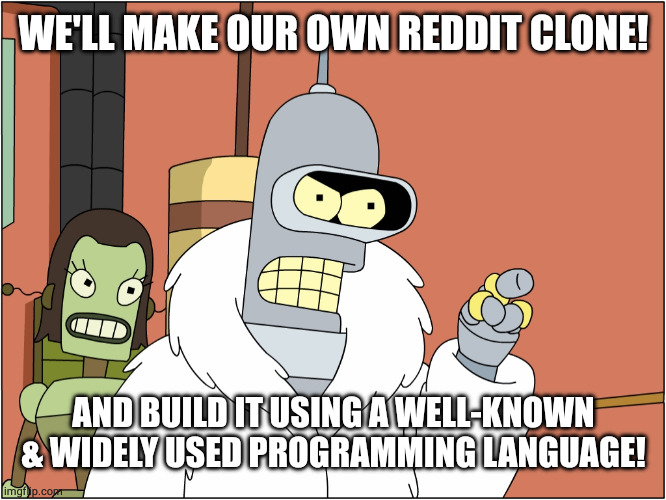
I did notice. If Rust isn’t “widely used”, then I’ll need to let Apple, Microsoft, Google, Amazon, Mozilla, Huawei, Meta, the Linux kernel devs, and a fuckload of open-source projects know that they actually don’t exist.
It’s plently widely used, and unlike
a scripting language(edit: Python), it’s performant – as server software should be. Rust is not a hard language to use or learn either, and it’s great for large projects.Removed by mod
As someone who routinely works on a complicated C++ codebase, had to use C, Python, and Java all the time through school, has had to use absolute trash like JavaScript and PHP, and has dabbled in languages similar-ish to Rust like Go and Swift, Rust to me is simple to work with.
The compiler is extremely helpful when I do something wrong, it has sensible conventions like immutability by default, Cargo is a streamlined build system, I’ve found the documentation easy to read, I actually prefer curly brace-delimited scopes to tabbed ones and explicit type declarations for readability, and in the obvious comparison to C/C++, Rust lacks extremely common memory footguns.
Obviously compared to Python – with its mountain of syntax sugar and a library for everything – Rust is going to be more difficult. But for languages in general? Rust is not at all one of the harder ones I’ve learned or used.
(Btw I hate Java; it’s the worst language I’ve ever used.)
This is the most fediverse thread I’ve seen in years
Removed by mod
deleted by creator
I’m surprised you put C in there. Its limited vocabulary does mean you don’t have to deal with e.g. C++'s 50 million ways to do something, but this combined with a lack of guardrails makes it agonizingly difficult to do a lot of basic things – most notoriously dealing with strings.
I actually consider C a good beginner language, but only in the sense that 1) it does have that simple toolkit, 2) it and its descendants are widely used, and most importantly 3) the bullshit C makes you deal with gives you a better understanding of what higher-level languages do for you automatically and why. To me, it’s probably the hardest mainstream language to learn after maybe something like x86 or ARM assembly (which, for better or worse, hit points 1 and 3 even harder than C).
I generally agree though that Rust has always been somewhere in the middle for me.
Which paradigm do you even refer to? Lifetimes? A C++ developer who cannot understand lifetimes (at least conceptually) in a day is a terrible developer.
I would know, I work with such people.
To answer your first question, I’ve definitely spent days of my life trying to fix c++ templates because the compiler won’t fucking tell me what’s actually wrong. It loves telling me some unrelated copy constructor is deleted though… And all of that is actually worse with new stuff like ranges. Which are great on paper, but are a maintainability nightmare.
I think the borrow checker is trying to tell me to use clone on recursive calls inside a double nested loop!
I’ve had a similar experience. Yes, I have had days where I spent a significant amount of time beating my head against the wall, but that’s part of the learning curve. Those days stretched farther apart pretty rapidly.
I had to do c++ template metaprogramming (insane, stay away from it at all costs), Rust makes me think of that in a more better modern way.
Easy? I wouldn’t say, and the compiler is slow ☺️
I love python but only as a scripting language because of GIL and the ridiculous performance (and it’s not really suited for “large” projects). But if you need a little thing it’s so fast to spin up.
Disclaimer: am old C/C++ dev.
While I agree with the general sentiment, scripting languages are perfectly fine to use for server software. Would you call hackernews slow? Its been running on lisp (originally Arc, now common lisp) for its entire existence. Another fun example of popular interpreter is, y’know, the JVM.
Common Lisp could be compiled, so not the best example.
Lua is a way better example, since Lua scripts often finish in the time it takes Python to get going at all. And that’s with interpreted Lua, without JIT. I once straight up had to recheck if I left the dummy static output in there instead of calling my script, because the result was appearing instantly.
There’s also Fennel, a Lisp compiled to Lua on the fly. Since Lua is so snappy, the compilation overhead is unnoticeable.
Performance is an attractive metric because it’s something you can put a number on. It’s measurable, so comparisons are easy.
But there are so many other metrics that are more important.
Still, https://leafo.net/lapis/ looks like something I’d like to try sometime. I don’t know anything about the Lua web framework ecosystem, that’s just the first search result I found. Do you have any recommendations?
I’m more familiar with Lua for desktop scripting — I’m using it whenever I can, if it’s something that’s more than like three lines in Bash and the Lua libraries aren’t too bad. I’m even using it on the phone when dragging around blocks in Automate becomes too much (its minuscule footprint comes handy there). There’s also the excellent automation app Hammerspoon for Mac, which uses Lua for its scripting.
I’ve been vaguely looking now and then into using it for web in the manner of node.js, with asynchrony being handled on the Lua side — but was offput by the fact that many popular Luarocks libraries presumed synchronous workings, and async requires installing different libs if they even exist. Node has it better since the libs were developed to be async from the start. Iirc Luvit is what I was looking at, there are both libs and some kinda frameworks for it.
OpenResty and frameworks for it like Lapis could be the better way to go. Nginx is pretty much mandatory anyway, and afaiu synchronous libs can be used then, leaving it to Nginx to chuck requests into multiple Lua threads. A drawback is that LuaJIT, used in Resty, still supports only Lua 5.1 features, which is pretty damn old.
I haven’t looked into Lua for web in a few years, but since apparently nothing like Hammerspoon with its built-in http server exists for Linux, I’ll need to pick it up again, just to do some custom remote control from the phone.
I’m a big fan of lapis. It’s built on openresty, a fork of nginx that embeds luajit into it. This means you can make use of all the features nginx has in your application. It’s really fast in my experience.
I have a medium-ish project written in lapis here: https://codeberg.org/irelephant/kittygram
There isn’t really much of an ecosystem around lua, lapis is really the only “proper” framework. There is stuff like redbean and mako which are cool, but not as complete/friendly to use as lapis imo.
Luarocks can be a bit of a pain as well (make sure to install packages for lua 5.1).
Lapis is made by the same person who made itch.io too, which i think it cool.
Great to see a real app built with it. It reminds me of Flask a lot, although I guess all mvc frameworks are pretty similar.
I would be surprised if you’d argue that more devs can write Rust than Python.
Web servers spent most of their time with IO, because the real work is mostly done by the DB. That’s why especially Node is very fast and influential design wise. But PHP, Ruby and Python are all very popular and valid choices for web servers. In the end, if you need real performance you have to scale horizontally anyways. And the small gains you make in a compiled language matter even less.
Coming from a Python and Java background Rust is way harder to learn. Don’t get me wrong, i like Rust, but it feels way harder. But i agree that its great for large projects and performance-wise!
I found this essay a great read on that point: https://vorner.github.io/difficult.html
The author makes some good points, interesting read. Thanks for the link.
Rust is a superb language, but it is famously not easy to learn.
I dunno, my first functional programming language really through me through a loop. I am starting my first Rust project and so far it doesn’t look to be that horrible.
Functional programming is very different in how you get stuff done.
I would recommend learning Elm first for functional programming before trying anything hairier like Haskell etc.
Elm is a small and lovely language for writing web pages/sites/user interfaces, and has a blisteringly fast compiler that is also the most genuinely helpful of all the compilers I’ve ever used.
It’s a blissfully stable antidote to JavaScript’s exhausting “that whole approach is so last month” churn.
Thanks for the suggestion! I will take a look once I make some more progress on my rust project. Time is tight these days, so I need to limit the quantity of things I attempt to do in parallel.
Good plan. One paradigm shift at time! All the best with the rust project.