I really hate how so many of these articles feel like they need to dumb it down with this “artificial sun” imagery. It feels so condescending. I’d rather learn more about the latest progress with nuclear fusion
articles such as this one usually are optimized for their audience, you just aren’t the audience. that’s ok. I’m rarely the audience either :)
a quick search should give you what you’re looking for https://www.science.org/doi/10.1126/sciadv.adz3040
Plasma is made from basicly over charging a gas with electrons the gas getting all pissy about having those electrons and starts dumping them. something do with elements wanting stability. In that process you get alot of heat out put. Now f you make it more dense I would conclude simply, you now have more ionized atoms in the plasma stream, meaning your plasma will be hotter if the stream will be the same size or if the plasma stream is shrunk but has the same number of ionized gas atoms, you have the same heat out put but in a smaller stream.
There is no current actual improvement other than the possibilities. By cooling the plasma edge and using clean wall materials, they broke a theoretical density barrier that could potentially bring steady-state fusion closer to reality.
That’s all it is. We’re no closer to steady fusion, but now we know we can push past the Greenwald limit.
I generally agree that science reporting treats everyone like children, but I really don’t have a problem with this analogy. Stars are the only naturally occurring fusion we have to observe and compare it to. To me that makes sense.
Sure… but the metaphor glosses over the fact that they haven’t really told us anything of interest. It SOUNDS good, but there’s no way to tell how significant it actually is.
Fusion breakthroughs have sounded good since the 90s, but we’re still the proverbial 10 years away from anything useful.


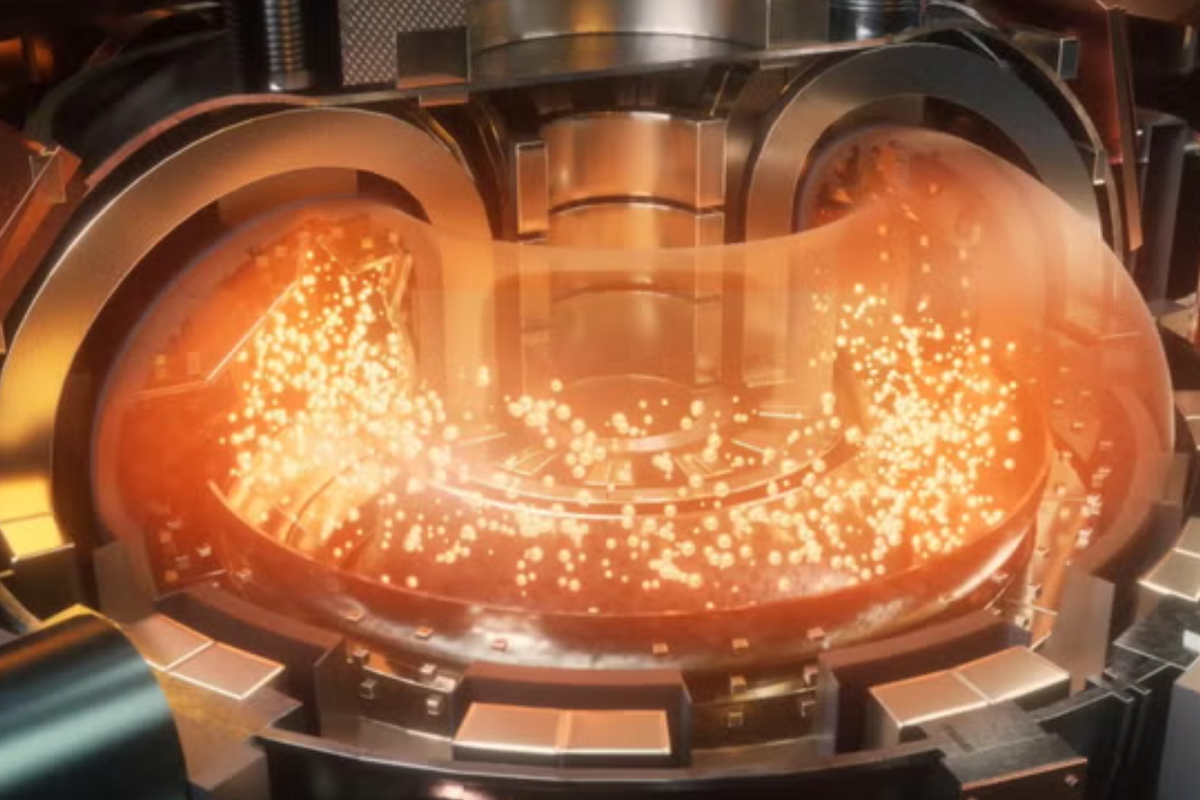
I really hate how so many of these articles feel like they need to dumb it down with this “artificial sun” imagery. It feels so condescending. I’d rather learn more about the latest progress with nuclear fusion
articles such as this one usually are optimized for their audience, you just aren’t the audience. that’s ok. I’m rarely the audience either :) a quick search should give you what you’re looking for https://www.science.org/doi/10.1126/sciadv.adz3040
It isnt optimized. Its gibberish written just to give some weight to the headline. People do bad jobs at science popularization too.
article didn’t say anything. How does denser plasma achieve higher temperatures or other benefits? What advances did their denser plasma produce?
Plasma is made from basicly over charging a gas with electrons the gas getting all pissy about having those electrons and starts dumping them. something do with elements wanting stability. In that process you get alot of heat out put. Now f you make it more dense I would conclude simply, you now have more ionized atoms in the plasma stream, meaning your plasma will be hotter if the stream will be the same size or if the plasma stream is shrunk but has the same number of ionized gas atoms, you have the same heat out put but in a smaller stream.
You’re having a space characters infestation, you should do something about that.
?
Right. where’s the actual content, the wording not treating us like idiots? What is the actual improvement?
There is no current actual improvement other than the possibilities. By cooling the plasma edge and using clean wall materials, they broke a theoretical density barrier that could potentially bring steady-state fusion closer to reality.
That’s all it is. We’re no closer to steady fusion, but now we know we can push past the Greenwald limit.
I generally agree that science reporting treats everyone like children, but I really don’t have a problem with this analogy. Stars are the only naturally occurring fusion we have to observe and compare it to. To me that makes sense.
Sure… but the metaphor glosses over the fact that they haven’t really told us anything of interest. It SOUNDS good, but there’s no way to tell how significant it actually is.
Fusion breakthroughs have sounded good since the 90s, but we’re still the proverbial 10 years away from anything useful.