I thought audio quality was more to do with the source and the destination. If you have a shit needle on a record or a speaker made of wood then its gonna sound like ass.
I never once thought it had anything to do with the cables. Unless they were frayed or damaged in some way.
But i am not an audiophile, i record my own music and mix etc, but never worried about cable quality before.
Once in a while I come across shorts of this audiophile showing of his gear. The cables he uses look like under sea cables, like he’s pulling 40kV out of his wall socket. It’s so ridiculous
EDIT: This fucking shit. I guess that they’re using XLR cables at the very least but cmon man what the fuck are those cables (especially the second setup)
I was buying a receiver and speakers in 2020 and when it came time to pick out speaker wire, the salesperson walked over to where the wire was and began the pitch…
Salesperson: so when the frequencies are higher the electrons end up traveling only on the outer layer of the wire instead of in the middle…
Me: yeah, skin effect, I did electrical engineering
Salesperson: ah, so I guess you know you don’t need this then (pointing to gimmicky monster speaker cable that had a single strand of wire in a spiral around the main bundle with a clear jacket so you can see it)
Exactly this, the cables never mattered. They’re the least significant part of an audiophile system and I doubt anyone could tell the difference between a crappy cable and a good quality cable. People get good quality cable for durability rather than sound quality.
I think the term audiophile has changed in the last decade or two, because now i keep seeing being used to mean “someone who likes music more than the average person”. Before it was more “had an entire room dedicated to music listening and if you move their chair a millimetre they will literally murder you”
That’s the kind of person who swears that can tell s huge difference based on cable (but, of course, never in a blind test).
There are websites dedicated to selling them things they don’t need. A 1m audio cable can cost several tens of thousands of pounds/dollars. And they’ll buy them and swear that they make a significant difference to the timbre of the hi hats on track 3 of The Joshua Tree
Think I’m exaggerating? Here’s a cable, for home use. 8ft. Yours for the low, low price of £98,770
I do mean “person with a huge setup dedicated to music listening”. An audiophile who actually knows what they’re talking about will tell you to get any cable from a reputable brand.
But of course you also have “audiophiles” who have no idea whatsoever.
Even more than the actual contact with the media, the entire system breaks down at the ears. If your ears aren’t well-trained, then you don’t even know what to listen for. You might think loud bass is good, or booming drums, and never notice that you can’t hear any mids.
So in a blind test like this, some people just might prefer a sound that this experiment has little impact on, so they wouldn’t be able to notice any differences.
A well-trained ear might be able to detect differences between them, but still not have a real preference. Besides being able to hear all the different frequencies, you have to know what the instruments sound like in real life to know if those frequencies are reproducing accurately. Again, if you don’t what it’s supposed to sound like, you really don’t know if ANY change in components makes a positive or negative difference in the natural sound, you only know the difference relative to your personal preference.
TL;DR: This “experiment” doesn’t prove anything. It’s just funny.
Yes, so my well-trained ears prefer noisy sound, something like 48kb mp3s I downloaded from the web in my childhood (born 1996). Because that’s less likely to cause migraine through them than a good record with some annoying sounds in it, preserved by a more precise lossy encoding. And things you want to hear are kept well enough even by 48kbit mp3s.
And this surprisingly keeps with analog things, like headphones and speakers. I prefer something cheap and noisy that makes sounds softer to something quality and with crisp sound, but somehow too crisp.
And I do have good ears, I can hear a lot of things, a cat walking on a neighboring plot in countryside during wind, things like that. Hence the migraines.
Some of it is genetic, but a lot of it is years of training in hearing and teasing out all the frequencies.
I spent years in the audiophile record business back in the transition days from analogue LPs to digital CDs, and spent a LOT of time with beyond top-of-the-line audio gear, including high end stuff that wasn’t even on the consumer market.
My ears got trained from many years in bands and orchestras, then recording sessions, then hearing the final recordings on CD, as well as thousands of other recordings, and many live performances by some of the greatest orchestras in the world. I know what it is supposed to sound like at every stage of the process.
Bottom line, cables aren’t going to be a major issue. Guarantee you’ve got at least 10 other variables making a bigger difference, and most of them can’t even be fixed.
Solid natural wood is a horrible material for loudspeaker cabinets. Granted, this fact isn’t limited to just speakers. Wood expands and contracts with humidity, which means making boxes of any type out of solid wood complicated. Cabinet doors have floating panels in the center for exactly this reason. That’s why you should use breadboard ends if you want to frame a wood table, otherwise your table will risk warping and cracking. There’s also the whole non-uniform density thing. Most loudspeakers use something like MDF as a substrate and will veneer the outside. MDF is both stable and uniformly dense, which makes achieving a “dead” (or non-resonate) enclosure a lot easier.
I heard one guy talk about the importance of cable shielding and connector material and shit once, but the ones I actually know just talk about the other hardware (speakers, mixing pults, lots of terms I couldn’t recite).


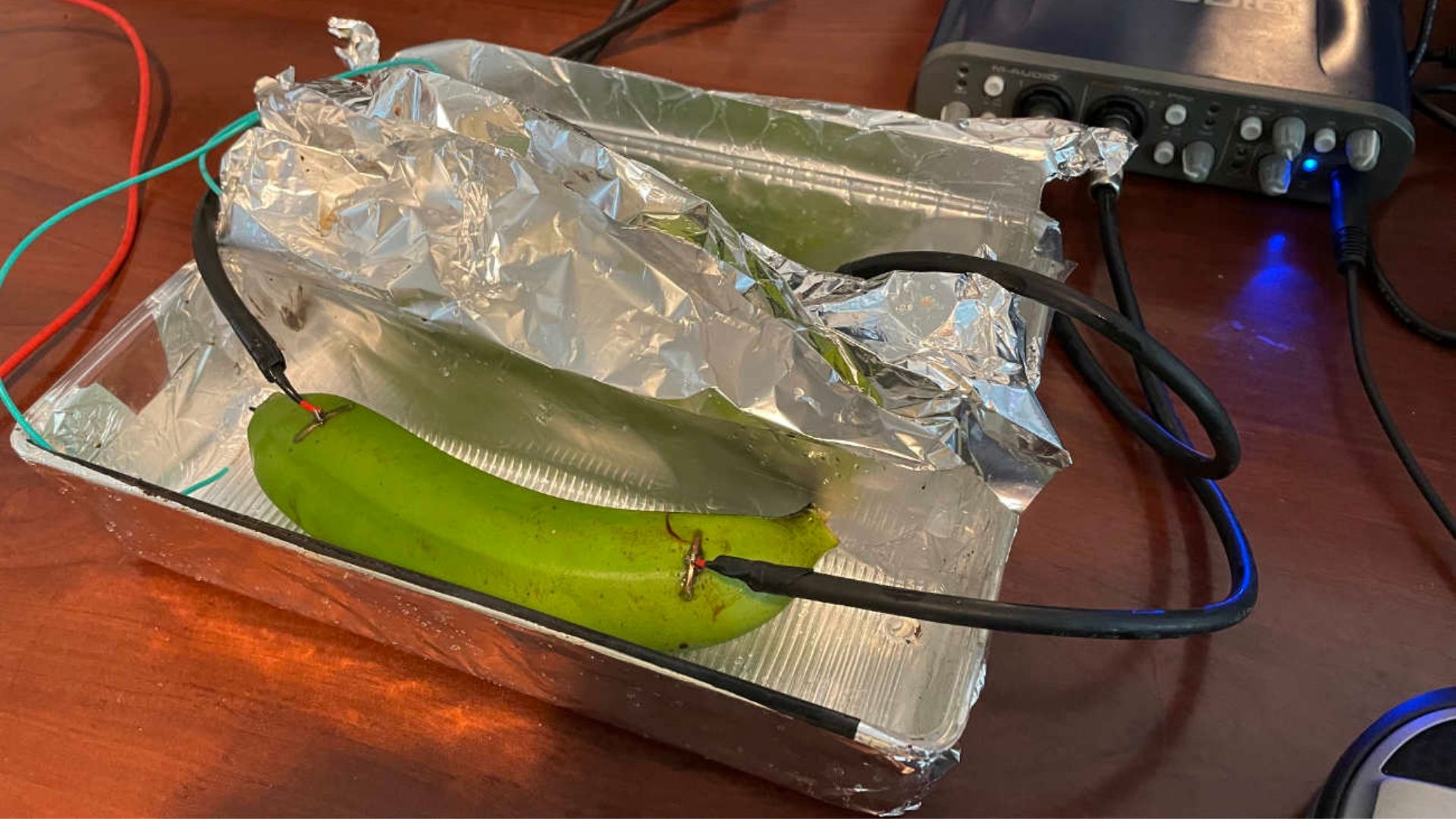
I thought audio quality was more to do with the source and the destination. If you have a shit needle on a record or a speaker made of wood then its gonna sound like ass.
I never once thought it had anything to do with the cables. Unless they were frayed or damaged in some way.
But i am not an audiophile, i record my own music and mix etc, but never worried about cable quality before.
Once in a while I come across shorts of this audiophile showing of his gear. The cables he uses look like under sea cables, like he’s pulling 40kV out of his wall socket. It’s so ridiculous
EDIT: This fucking shit. I guess that they’re using XLR cables at the very least but cmon man what the fuck are those cables (especially the second setup)
It’s not about sound quality, it’s about wasting money and showing off. Maybe some placebo effect, too.
I was buying a receiver and speakers in 2020 and when it came time to pick out speaker wire, the salesperson walked over to where the wire was and began the pitch…
Salesperson: so when the frequencies are higher the electrons end up traveling only on the outer layer of the wire instead of in the middle…
Me: yeah, skin effect, I did electrical engineering
Salesperson: ah, so I guess you know you don’t need this then (pointing to gimmicky monster speaker cable that had a single strand of wire in a spiral around the main bundle with a clear jacket so you can see it)
Me: correct (grabs the cheapest 16awg)
Exactly this, the cables never mattered. They’re the least significant part of an audiophile system and I doubt anyone could tell the difference between a crappy cable and a good quality cable. People get good quality cable for durability rather than sound quality.
Cable quality only matters in long distances, when the dumping of the signal is noticeable.
If the distance is so short that there is not any voltage drop and still out powering the external noise. There is in effect no influence
Oh yeah, for sure. I didn’t include that part because an audiophile setup rarely has a need for long distances.
I think the term audiophile has changed in the last decade or two, because now i keep seeing being used to mean “someone who likes music more than the average person”. Before it was more “had an entire room dedicated to music listening and if you move their chair a millimetre they will literally murder you”
That’s the kind of person who swears that can tell s huge difference based on cable (but, of course, never in a blind test).
There are websites dedicated to selling them things they don’t need. A 1m audio cable can cost several tens of thousands of pounds/dollars. And they’ll buy them and swear that they make a significant difference to the timbre of the hi hats on track 3 of The Joshua Tree
Think I’m exaggerating? Here’s a cable, for home use. 8ft. Yours for the low, low price of £98,770
That’s not a pair, btw…
I do mean “person with a huge setup dedicated to music listening”. An audiophile who actually knows what they’re talking about will tell you to get any cable from a reputable brand.
But of course you also have “audiophiles” who have no idea whatsoever.
As long as its not too crappy. Otherwise you’ll wonder why you’re picking up radio.
I’ve literally used lamp wire in a pinch before…sounded great 😆
Yep cables only matter in terms of preference. Unless we are going so cheap it’s barely holding on
Even more than the actual contact with the media, the entire system breaks down at the ears. If your ears aren’t well-trained, then you don’t even know what to listen for. You might think loud bass is good, or booming drums, and never notice that you can’t hear any mids.
So in a blind test like this, some people just might prefer a sound that this experiment has little impact on, so they wouldn’t be able to notice any differences.
A well-trained ear might be able to detect differences between them, but still not have a real preference. Besides being able to hear all the different frequencies, you have to know what the instruments sound like in real life to know if those frequencies are reproducing accurately. Again, if you don’t what it’s supposed to sound like, you really don’t know if ANY change in components makes a positive or negative difference in the natural sound, you only know the difference relative to your personal preference.
TL;DR: This “experiment” doesn’t prove anything. It’s just funny.
Yes, so my well-trained ears prefer noisy sound, something like 48kb mp3s I downloaded from the web in my childhood (born 1996). Because that’s less likely to cause migraine through them than a good record with some annoying sounds in it, preserved by a more precise lossy encoding. And things you want to hear are kept well enough even by 48kbit mp3s.
And this surprisingly keeps with analog things, like headphones and speakers. I prefer something cheap and noisy that makes sounds softer to something quality and with crisp sound, but somehow too crisp.
And I do have good ears, I can hear a lot of things, a cat walking on a neighboring plot in countryside during wind, things like that. Hence the migraines.
Interesting, do you know where I can buy a set of trained ears? - Audiophiles, probably.
Some of it is genetic, but a lot of it is years of training in hearing and teasing out all the frequencies.
I spent years in the audiophile record business back in the transition days from analogue LPs to digital CDs, and spent a LOT of time with beyond top-of-the-line audio gear, including high end stuff that wasn’t even on the consumer market.
My ears got trained from many years in bands and orchestras, then recording sessions, then hearing the final recordings on CD, as well as thousands of other recordings, and many live performances by some of the greatest orchestras in the world. I know what it is supposed to sound like at every stage of the process.
Bottom line, cables aren’t going to be a major issue. Guarantee you’ve got at least 10 other variables making a bigger difference, and most of them can’t even be fixed.
deleted by creator
Speakers are made of wood, the good ones are at least.
Unless your referring to the actual drivers, then yeah wood wouldn’t really work in that case.
Solid natural wood is a horrible material for loudspeaker cabinets. Granted, this fact isn’t limited to just speakers. Wood expands and contracts with humidity, which means making boxes of any type out of solid wood complicated. Cabinet doors have floating panels in the center for exactly this reason. That’s why you should use breadboard ends if you want to frame a wood table, otherwise your table will risk warping and cracking. There’s also the whole non-uniform density thing. Most loudspeakers use something like MDF as a substrate and will veneer the outside. MDF is both stable and uniformly dense, which makes achieving a “dead” (or non-resonate) enclosure a lot easier.
Yes you’re 100% right. Solid wood will warp and split, I did mean MDF and should have said as such
Yeah, i meant the cone, not the case
Well, paper is a very popular material in speaker cones, including high-end
Cables give resistance… thats all…
I heard one guy talk about the importance of cable shielding and connector material and shit once, but the ones I actually know just talk about the other hardware (speakers, mixing pults, lots of terms I couldn’t recite).