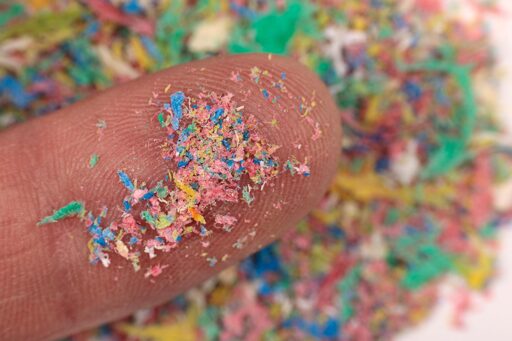
%90 of human tissues probably contain microplastics. title sounds like baity. Is it significantly less or more than other tissues is the question.
The article states that cancerous areas had ~2.5x more microplastics than the surrounding non-cancerous areas. It could be a chicken and egg/correlation≠causation situation, (is cancer caused by microplastics, or do cancerous cells attract microplastics?) but the article does outline that cancer cells clearly had more microplastics.
It’s about 2.5x more than the surrounding non-cancerous prostate tissue.
Researchers also found that these fragments appeared in greater amounts inside cancerous tumors than in nearby noncancerous prostate tissue.
For those who want to give an opinion based on even a smidge more than just the title.
They are also found everywhere else, what does such statement try to imply?
If you read the article, the concentration was 2.5x higher than non-cancerous tissue. That’s a statistically significant increase.
Plastic seems to I be a massive problem
I think that it’ll be the final nail in humanity’s coffin.
Climate Change is really bad, but humans are going to survive it, although in greatly reduced numbers for a long time.
But plastics currently have a measured negative impact on fertility rates. Can’t survive as a species if you can’t reproduce.
So is lab techique that allows microparticle contamination, leading to over-measurement of microplastics.
Notably, tumor tissue contained significantly more plastic. On average, cancerous samples had about 2.5 times the concentration found in healthy prostate tissue (about 40 micrograms of plastic per gram of tissue compared with 16 micrograms per gram).
Still, correlation does not imply causation. It might just be that because of the nature of what tumors are, they get stuck with more microplastics. The biggest problem with this study is that there are known carcinogens in some types of plastics over others, and it seems to outright choose to dismiss any attempt at distinction for the sake of the microplastic boogieman.
Or maybe people that have unhealthy lifestyles that generally might include more foods or living conditions more susceptible to microplastics intake. IOW more plastics packaged foods and drinks, living near roadways where tire particles and exhaust both add to poor health and stress, etc.
Oh, that’s just the credit card I eat sometimes. I like to go down to the fridge on the weekend and shove that shit in like an atm. My prostate makes the “munch munch” ticket feeder sound every time.
All tumours, no exception, contain dihydrogen monoxide.
Notably, tumor tissue contained significantly more plastic. On average, cancerous samples had about 2.5 times the concentration found in healthy prostate tissue (about 40 micrograms of plastic per gram of tissue compared with 16 micrograms per gram).
Sure, though it’s to be expected that everything contains water in the body. To expect microplastics, however, is kind of different – leaving aside their showing a legitimate difference in microplastic quantity between healthy and unhealthy prostates.
Correlation still doesn’t prove causation. Tumors process resources different than surrounding cells. The worst thing about the study is that it chooses to focus on microplastics without distinction when we know certain types of plastics have far higher carcinogenic risk than others, it would have just taken than slight bit more effort to actually make it worthwhile.
Naturally, more studies need to be conducted and microplastics have only been intensively studied beginning this past decade (PFAS being separate and longer). Similar to the carnivore fad diet, odds are exceedingly-high that having microplastics is not good for us but long-term and fully causal studies have not fully identified all mechanistic linkages. Yet I recall tobacco industries rhetorically hiding behind these arguments in a similar manner despite growing concerns from scientists and medical professionals.
I just take issue with the implication of the other user that this is as harmless as ubiquitous and as fearmongering as water. That in itself is absurd.
Microplastics should not be in our fucking bodies. Water should.
You know, I’ve never understood why there are no warning labels on the bottles of the stuff.
correlation doesnt equal causation. CANCER cell in general have higher metabolic energy requirements, so they intake more(pump) in the surrouding environment to fuel thier uncontrolled cell division, so naturally microplastics on the outside of the cell would be pumped into the cell along with nutrients it stealing at higher than normal tissue to fuel its growth.
https://pmc.ncbi.nlm.nih.gov/articles/PMC12505851/ (October, 2025)
Microplastics as emerging carcinogens: from environmental pollutants to oncogenic drivers
ABSTRACT: The widespread environmental pollution of microplastics (MPs) and nanoplastics (NPs) has become a major public health issue, with increasing evidence associating their bioaccumulation with cancer onset. This review offers a thorough examination of the etiological contributions of MPs/NPs in carcinogenesis, clarifying their mechanistic roles in in vitro, in vivo, and patient-derived evidences. Relevant studies were systematically identified and screened following the PRISMA 2020 guidelines to ensure methodological transparency and quality. We highlighted recent discoveries that emphasize the varied accumulation of MPs in several human cancer tissues, including lung, colorectal, gastric, cervical, breast, pancreatic, prostate and penile malignancies. These particles induce harmful biological effects by chronic inflammation, oxidative stress, genotoxicity, disturbance of lipid metabolism, and alteration of the tumor immunological microenvironment. Significantly, MPs/NPs disrupt various oncogenic signaling pathways, particularly NF-κB, PI3K/Akt/mTOR, Wnt/β-catenin, and p53, therefore facilitating tumor initiation, development, and metastasis. In vitro and in vivo studies have corroborated the carcinogenic potential of MPs/NPs, illustrating their capacity to cause cellular transformation, augment metastatic characteristics, and modify drug resistance pathways in cancer cells. Furthermore, the detection of MPs in human biological matrices, including blood, placenta, and tumor tissues, highlights direct human exposure and potential systemic effects. This review emphasizes the mechanistic insights with therapeutic significance, addressing current knowledge gaps in the field. Future research must prioritize biomarker identification, patient-centered investigations, therapeutic targeting, and the formulation of regulatory policies to alleviate the health hazards linked to microplastic exposure. Understanding the intricate relationship between MPs/NPs and cancer biology could facilitate the development of novel cancer prevention and management strategies related to environmental contamination.
Biased review written out of regional universities in India. These places crank out AI slop every week. All implications, no mechanism.
Tbh this comment sounds like biased AI slop. Especially when they detail the mechanisms literally in the abstract.
Everyone take note their Genetic Fallacy.
I agree with you, but with the carcinogenic nature of aryl compounds used in, and as by-products of, the polymerization and hardening/softening of plastics, the incidence of plastics in cells could in turn turn them cancerous, and thus increase the rate at which they draw nutrients and microplastics from the vascular system.
One may not necessarily cause the other, but they are overwhelmingly correlated - beyond the point of suspicion.
It would be interesting to see a study comparing other types of cancers, their microplastic levels, and the microplastic levels of other cells in progressively radiating distances from the cancerous cells.
Lymph nodes with cancer also contain dust and plant fibers. Mouse studies use stupid amounts of select plastic injected into susceptible strains.
This is junk until we see mechanism. Remember the BPA will give you tits scare? Shit science.
Wouldnt it be smarter to test for cancer risk with microplastics in blood as the explaining variable.
Because all that gives you is saying “wow Theres a tumor, and it contains microplastics”.
It’s no different than seeing amyloid plaques in brains with dementia and concluding they caused the dementia. That story has been going on for 30 years supported entirely by fraudulent manuscripts because it has to be true.
We have been implanting plastics in medicine with stents, prosthetics etc for 75 years. No one ever saw tumors at those implanted sites.
I dont know how one would reasonably test for a specific ‘risk’ of cancer from plastics considering the plethora of plastic and non-plastic causes of cancer as variables (both chemical and physical). One would have to go further and define specifically which mechanism(s) we’re talking about (Microplastic? Nanoplastics? Macroplastics? Physical contact/cellular damage from plastics? Amount of cancerous chemicals leeching out of the microplastics that entered the cell passively (considering theoretically it only takes a single molecule of a cancerous substance, to damage a specific oncogene whose reparation was simply overlooked by cellular gene repair chanisms thus causing cancer))? Do we differentiate between cancers caused by different plasticizers leeching out of different materials? And at what rate?)
As infinitely reductive as the thought experiment may be, ultimately, it’s almost unnecessary when you consider that any size of microplastics leeching any amount of carcinogenic chemicals inside cells is too much, and should be treated with as much disdain as drinking from leaded pipes.
More specifically, given the ubiquity of plastics in all humans, good luck finding a control group.
How? You test the variables separately. For example, if smoking increases risk by 50%, combine the smoker and non-smoker groups with that in mind
I’m pretty sure that 90% of all biomass in general contains microplastics these days.
Thanks boomers!
I’m curious why we always blame the boomers when it’s actually the baby boomers that are responsible for this.
Our grandparents did good things. It’s their children that fucked it all up with their greed and entitlement.
You realize that the boomers ARE the baby boomers right? It’s like saying Gen-Z, or Zoomers. Same generation.
Not really anymore. Boomer is just a generic term for old people standing in the way of progress now.
In case you’re not joking, Baby Boomers = Boomers. Their parents were from the Silent Generation or the Greatest Generation. Baby Boomer refers to people born in the “baby boom” caused by the prosperity and optimism following WWII, and these days is often shortened to just Boomer.
They are two different terms. Baby boomers describes a generation while Boomer is used as a pejorative term for old people out of touch with the younger generations.
Boomer is basically a modern version of fogie.
Thanks, I actually didn’t know that.
You’re one of the 10K today!
You greatly underestimate the pervasiveness of microplastics.
The other 10% contains macroplastic.
deleted by creator
https://www.theguardian.com/environment/2026/jan/13/microplastics-human-body-doubt
TL;DR: science currently has no efficient way to actually measure microplastic content with being able to control for outside contaminants
edit: please read the other comments below!
IIRC, there’s a harder, trusted process for measurement. But an easier method that has gained widespread adoption, and that method is what has been called into question.
This is a hit piece, echoes of big oil & tobacco. It’s picking studies that have (debatable) issues, then is casting a wide net that is encouraging doubt of all microplastics in the body studies. They take the time to explain why these can be ignored, but depend on you to go read the counter-counterarguments made by the original researchers of each study yourself.
Rauert says there are absolutely nanoplastics in our bodies, but micro plastics are unlikely due to their size.
It doesn’t do a meta-analysis of all MNP studies and doesn’t disregard bad criticisms or biased voices (Kuhlman). It’s also sensationalised.
Pulled from a chat about this when this was released
i’m not too knowledgeable which is why i didn’t bother to read the counter-counter arguments (case solved, problem in between seat and screen). also i didn’t realize it’s a hit piece, by no means would i like to propagate denialism.
you appear to be way more knowledgeable, do you have more conclusions from that chat? also can you do an eli5 what is meta-analysis?
My wife is the more knowledgeable one, but a meta-analysis is basically when you combine all the data of similar studies on a subject. It can expose studies that are bad within the data set and better assess the efficacy of the techniques used in a study. Compare that to what was done here, which was mostly just cherrypicking and highlighting the issues of a handful of studies.
I encourage you to give a peek at the counter counter-arguments! There is some jargon, but there is decipherable stuff in it (moreso than the original papers imo). One of them says something to the effect of “we had to skip the standard control because the control was in a container that was releasing microplastics” which I would consider reasonable.
I called this a hit piece because the person they quote about it being a “bombshell” works for DOW Chemical.
When you lack a control, though you should still be able to compare those with tumours and those without. One treatment (no tumour) to the other.
Controls answer: what if we did nothing? And how big are the effects vs doing nothing?
E: they can’t get accurate measurements themselves that’s the issue, not the lack of uncontaminated controls
can I get a eli5 for this? it sounds scary but I’m also not sure what you meant.
Agreed. The technology is still new, evolving, or not there yet. I was at an aquarium only last month. They were showing me a machine where there are only 7 available in the US so far. The scientist only got it like 3 days before I spoke to her so she hadnt used it yet but it measures concentration of microplastics in the ocean and is specific enough to tell you what different microplastics are there and their likely sources. Really cool but this science is super new and in its infancy.
We are all full of microplastics, but our tumors are too.
Take that, tumor!
Good thing we just deregulated like everything
I guess we should switch to glass disldos.
i read glass diodes and imagined a cyberpunk future lol
Whew good thing I only have dildos and not disldos
/j
Does the extra letter increase its girth? ;)
It looks pretty at least lol
100% of acid rain contains dihydrogen monoxide